Research outputs lived in isolated runs with no reusable team memory.
ContentOS / 2026Built at Fobet Media
Research is useful.
A system that remembers is better.
I helped shape an internal AI workspace that turns scattered Instagram research into reusable strategy, scripts, publishing plans, and measurable creator intelligence.
Product structure, interface systems, and typed frontend implementation.
Connect research, strategy, production, planning, and measurement through shared state.
Seven connected workspaces backed by Supabase, Gemini, and Apify.
A durable operating loop for Fobet Media’s content team.
01 / The problem
Research results needed a shared memory layer.
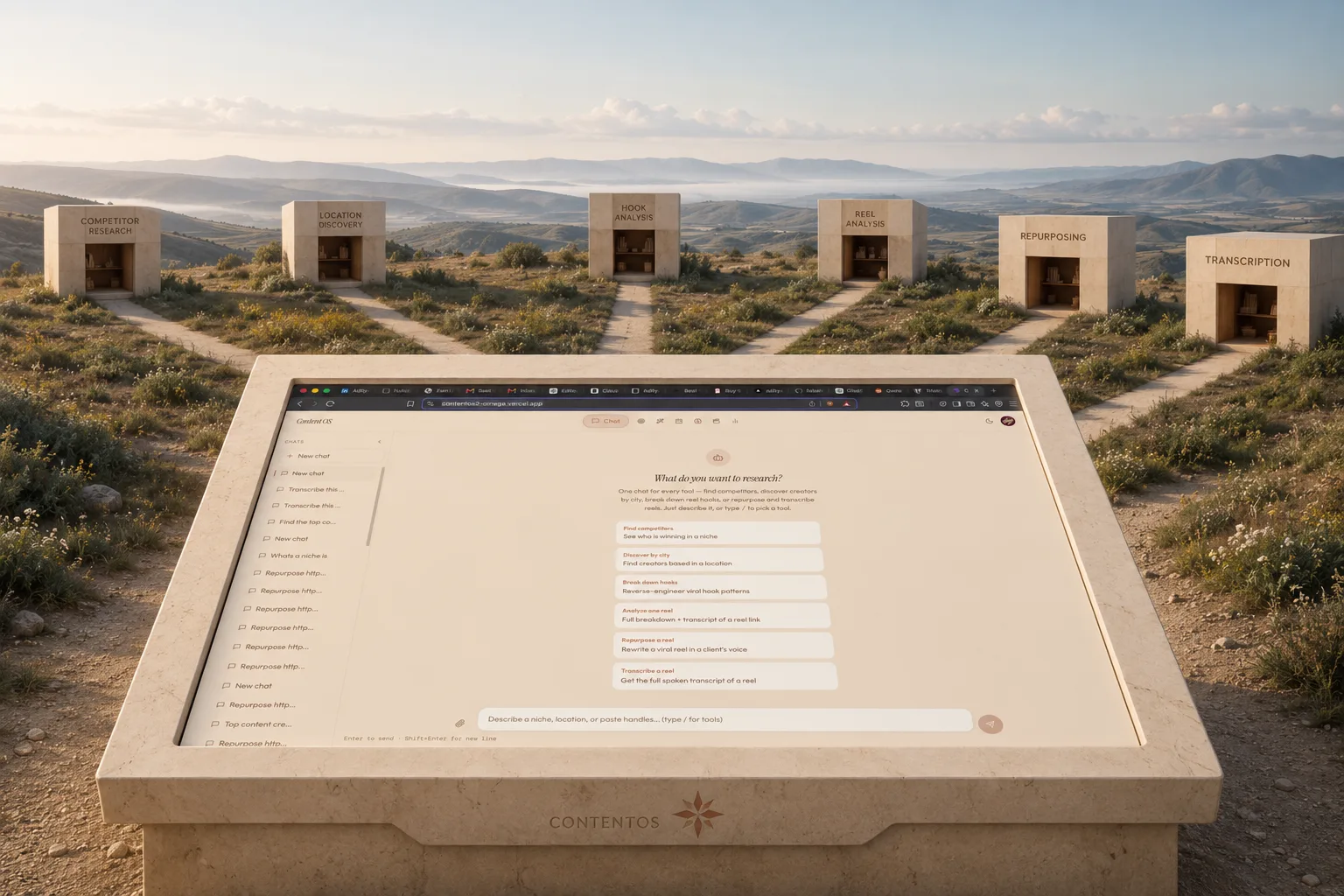
Competitor research, location discovery, hook analysis, transcription, and repurposing began as separate jobs. Useful findings lived inside isolated runs, so the team had to repeatedly reconstruct context before moving from research to a content decision.
3Core AI research pipelines documented in the product
7Connected workspaces from research through tracking
1Shared operational memory across the workflow
02 / From research to direction
Structured briefs ground every strategy.
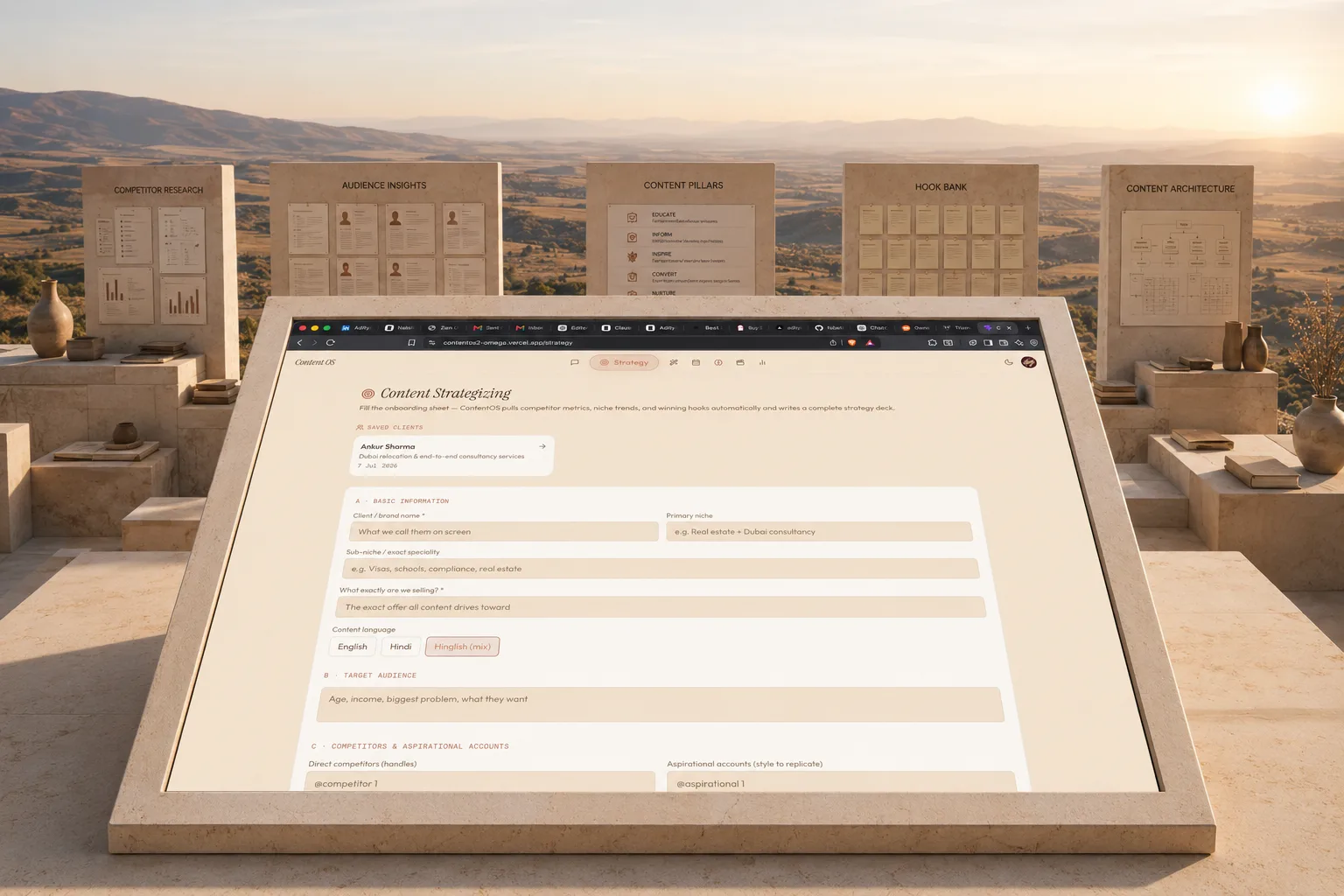
The strategy workspace asks for the inputs that actually change a recommendation—offer, audience, language, competitors, and aspirational accounts. ContentOS then combines those inputs with research signals to create a reusable strategy instead of another disposable chat response.
One research language
Competitor, city, hook, reel, repurposing, and transcription tasks share one conversational surface.
Explicit inputs
Strategy generation begins with a structured brief so important business context is inspectable.
Reusable output
Research becomes client strategy, content pillars, hook banks, and future production context.
03 / Production loop
A good reference should become a starting point—not a copy.
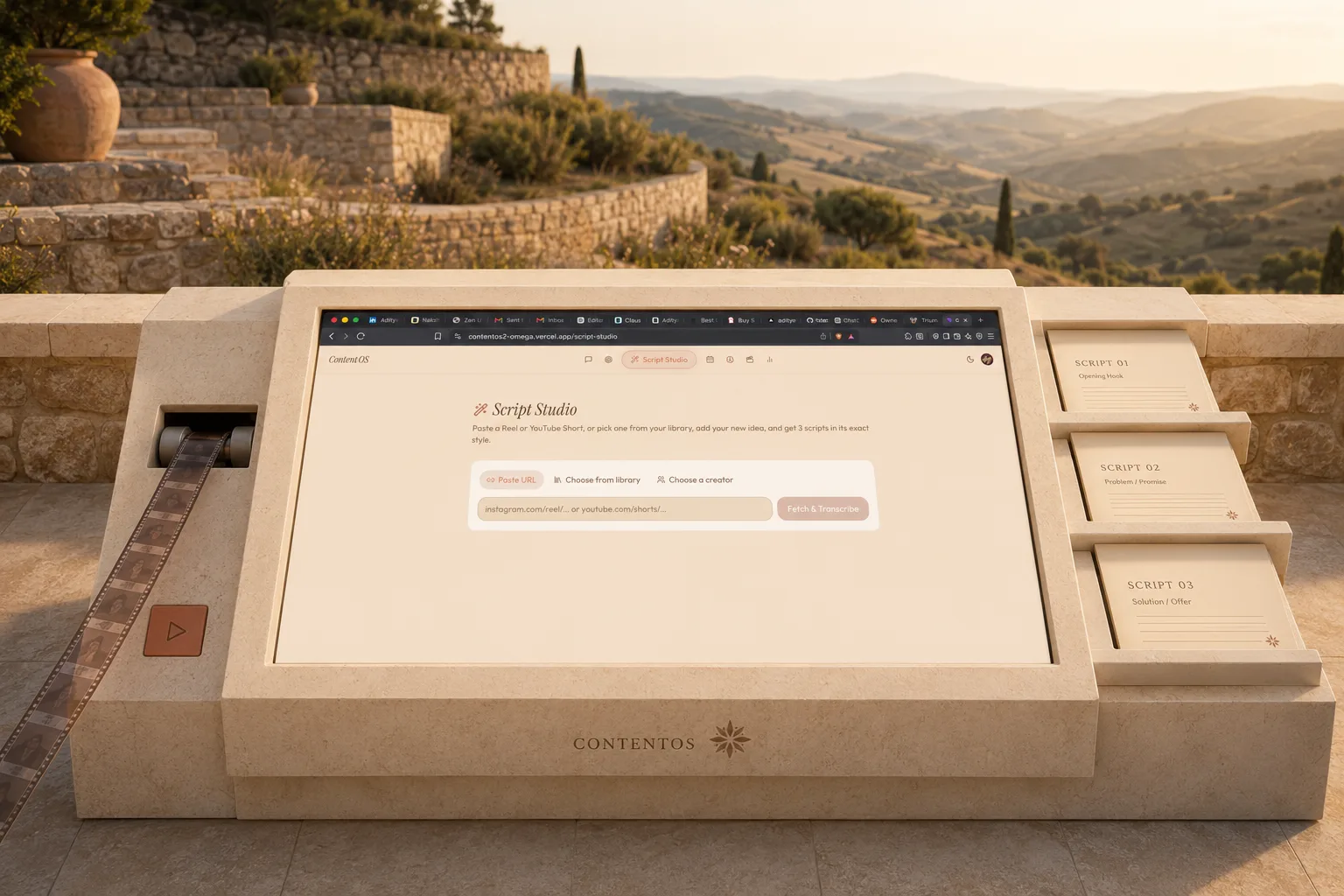
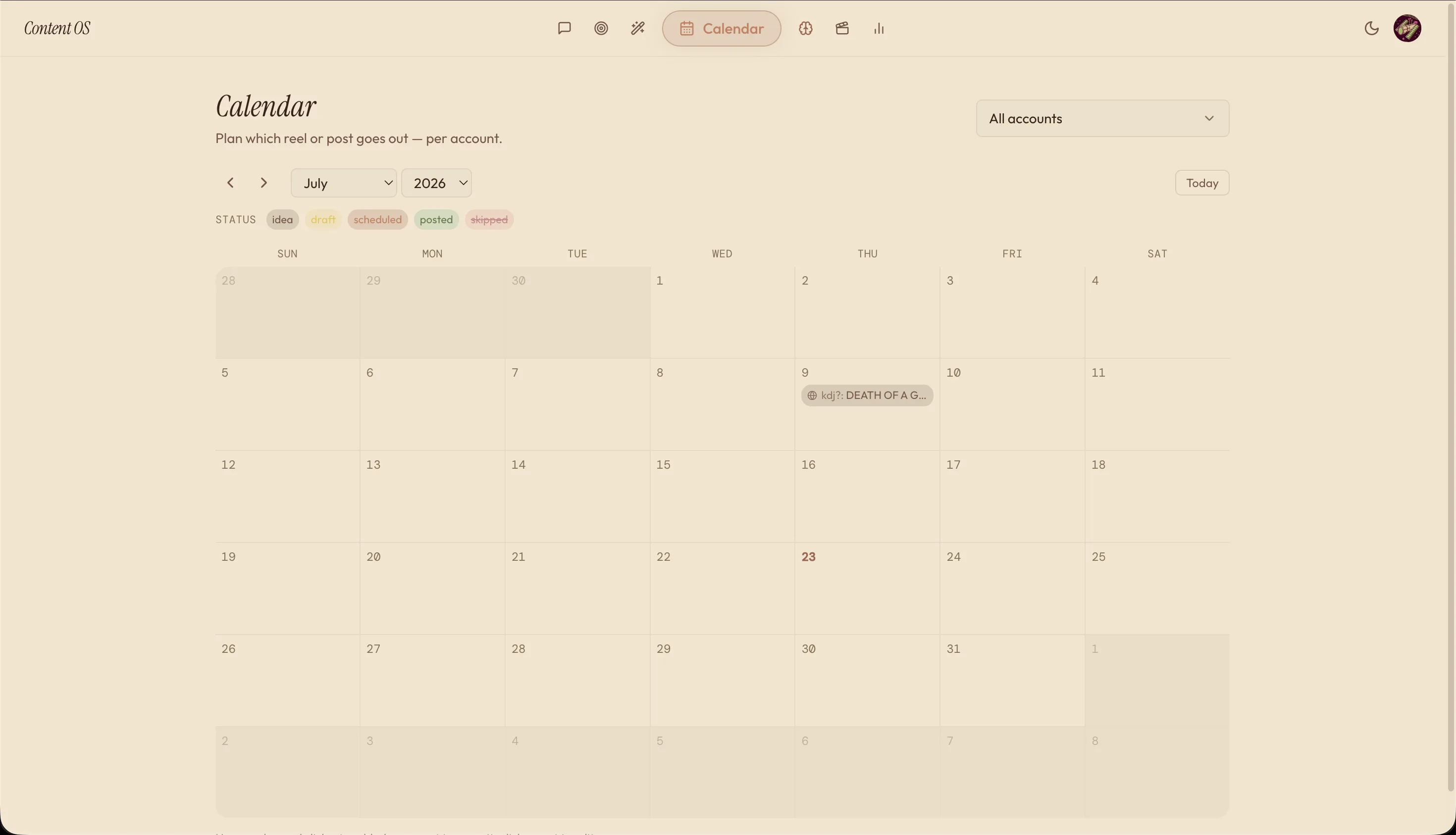
Script Studio accepts a Reel or YouTube Short, extracts its useful structure, and produces three scripts for a new idea in the selected creator voice. The calendar then gives those outputs an operational destination with account-level status and publishing context.
04 / Product memory
The compounding advantage was not generation.
It was remembering.
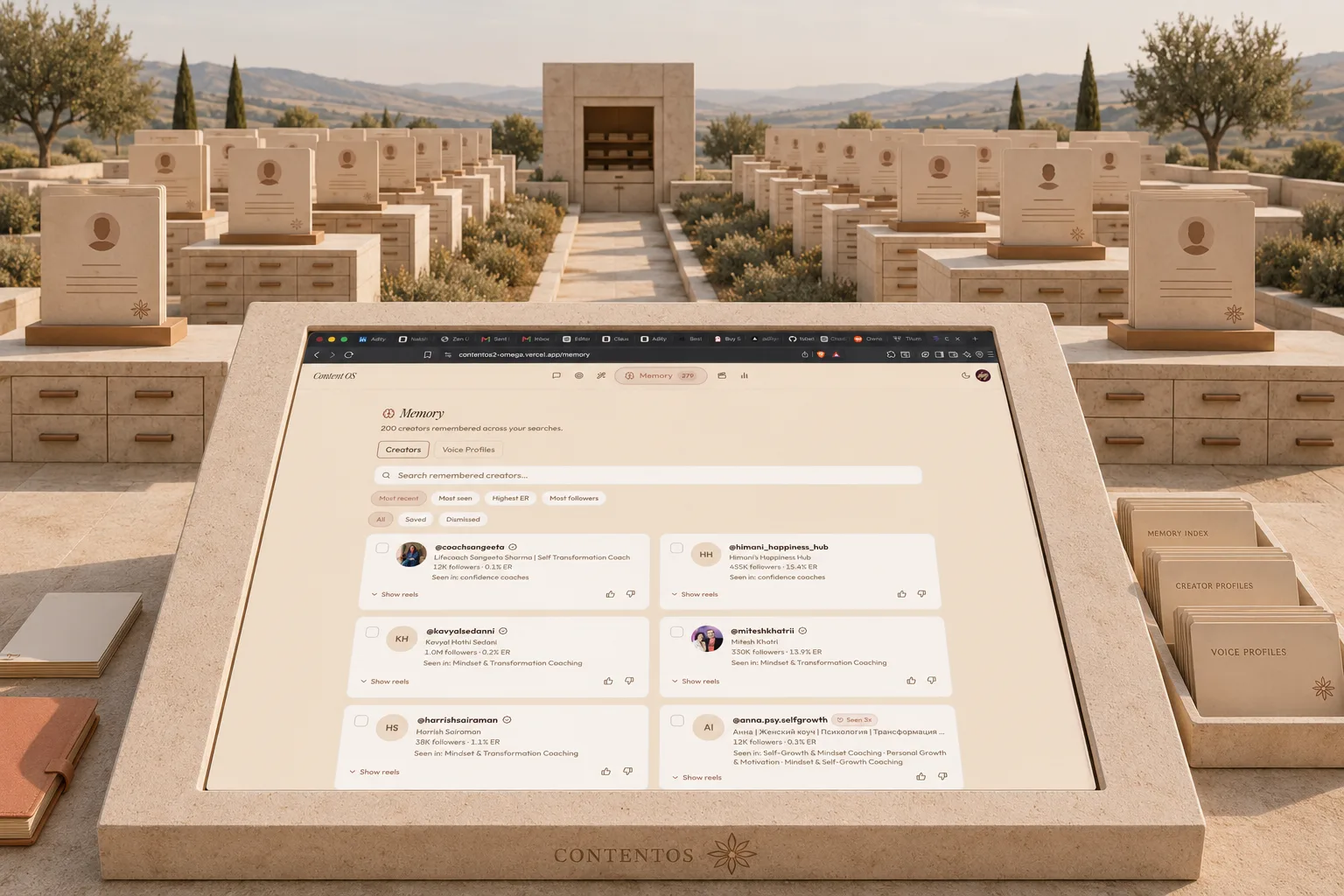
Creator Memory and Reel Gallery turn research runs into a durable library. The team can search, rank, save, dismiss, inspect prior appearances, and send a useful reel directly into the remix workflow instead of starting from zero.
200Creators visible in the captured product memory
200Reels available across captured research runs
1 loopResearch findings feed future scripting and strategy
05 / Design engineering
The interface sits on top of a real
operational architecture.
The public repository documents a strict TypeScript React application with authenticated team access, persisted Supabase data, Zustand state, Gemini-powered analysis, and Apify collection jobs. The system is divided by product responsibility rather than presented as one opaque AI call.
Strict TypeScript
Typed React surfaces make research results, saved entities, and workspace state explicit across the application.
Role-aware access
Clerk protects the internal workspace while finance and administrative capabilities remain permission-aware.
Supabase + Zustand
Durable product data lives in Supabase while Zustand coordinates responsive client-side workflow state.
608+ unit tests
As of Jul 2026, the repository documents more than six hundred unit tests around a product that depends on multiple asynchronous services.
06 / Outcome
Shared memory turns seven tools into one operating loop.
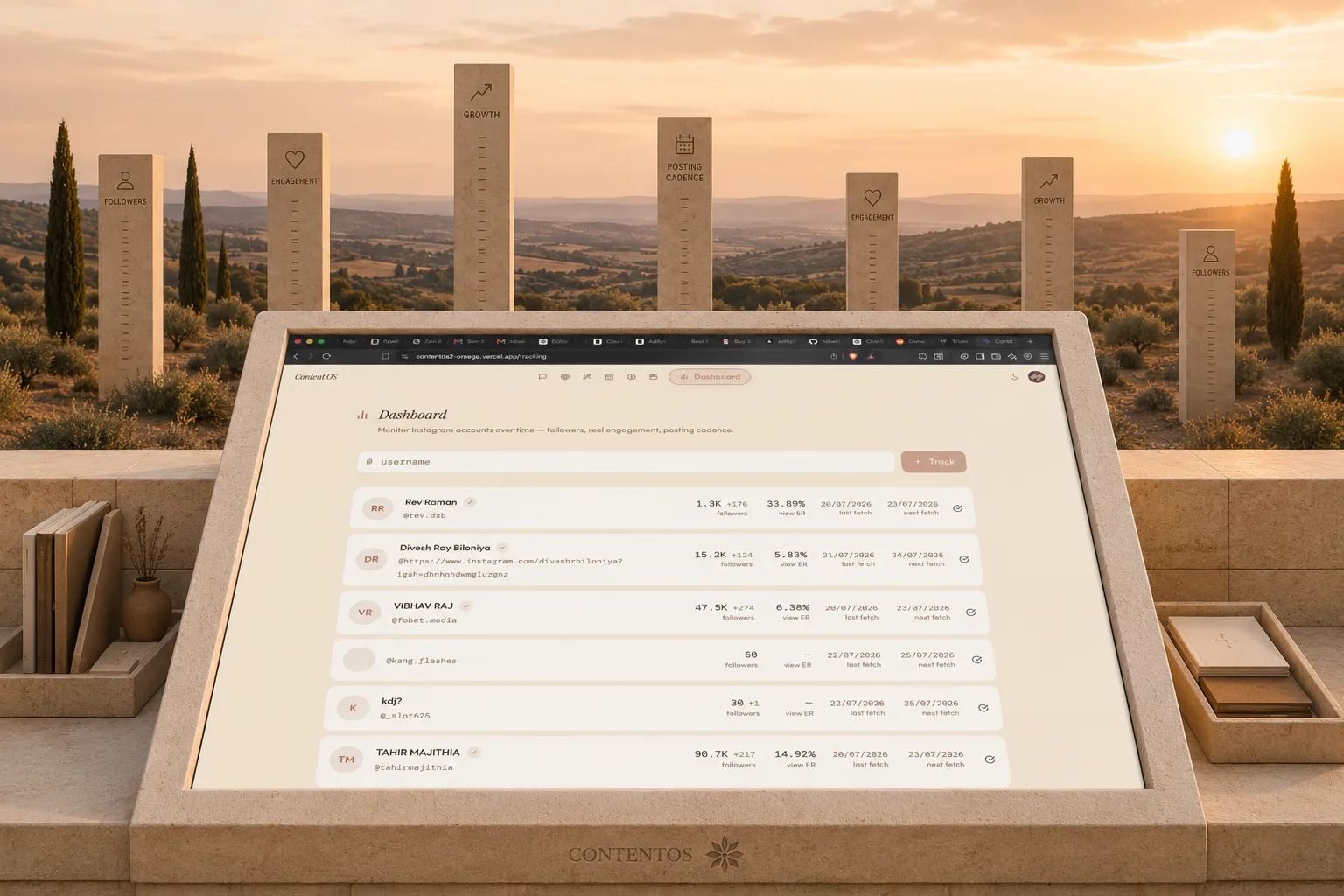
The shipped product connects discovery, judgment, creation, planning, memory, and measurement. A useful creator can move from research into memory; a strong reel can move into Script Studio; a script can move into the calendar; and tracked accounts inform the next round of research.
ResearchDiscover competitors, locations, creators, reels, and hooks
ProduceBuild strategy, remix references, and plan publication
LearnRemember useful sources and monitor performance over time
Reflection
What I would improve next: make source freshness visible across every generated recommendation, add clearer recovery paths for failed third-party embeds and scraping jobs, and connect published calendar items directly to their later performance record.
Next case study
Naksha StudioA team inside the terminal.